



Host-parasite interactions in the Maculinea-Myrmica system
Maculinea are among the most endangered butterfly species in Europe.
The most important characteristic of the Maculinea genus is the relationship between their larvae and Myrmica ants. After mating, females lay single eggs on particular foodplants. In the fourth stage of development, the larva leaves the flower and falls to the ground: where it could meet Myrmica ant workers. Workers take the larva inside their colony, where the caterpillar spends the following 9-10 months feeding and increasing its body mass, inside it. At the beginning of summer the caterpillar moves into the superior part of the nest where it pupates and after three weeks encloses as an adult.
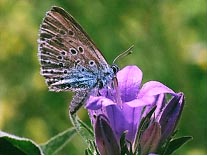
A crucial moment in the life of Maculinea is the adoption by Myrmica ants because all Maculinea species are obligate Myrmecophil, using chemical and acoustical mimicry, the caterpillar is able to fully integrate into an ant colony.
We are trying to detect if there are differences in chemical agents involved in this kind of interaction that could explain different patterns of host-specificity and different levels of specialization between these butterflies, in particular Maculinea nausitous and Maculinea teleius. In more detail we record the physiological responses of Myrmica workers by electroantennogram (EAG) and detecting the adoption and choice behaviour of Myrmica workers in the laboratory, using wild colonies kept in artificial nests and recently emerged Maculinea larvae (from the flower head).
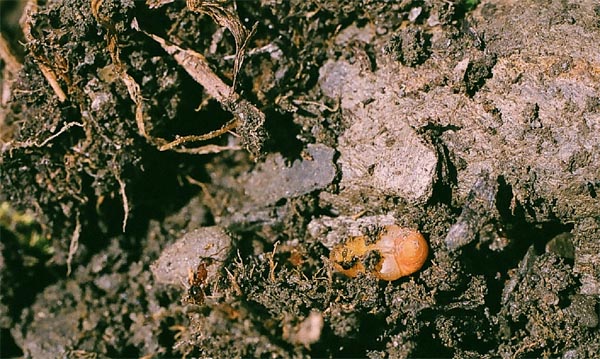
In addition we also test the possibility for a local adaptation that could be due to this strong relationship, performing adoption and choice behaviour experiments with ants and butterfly larvae from different regions.
A further aim of the research on the Maculinea-Myrmica interaction is to detect the impact of Maculinea parasitism on the genetic structure of the Myrmica population, evaluating the degree of polygyny; comparing Myrmica populations sympatric with Maculinea to Myrmica populations allopatric to Maculinea.